Where to launch your startup in 2026 (and in what order)
Launch boards, communities and directories each do a different job. Here is a simple order that turns one launch into a month of visits.

The short answer
Launch in waves, not all at once. Start where feedback is cheap and the window is long, fix what people tell you, then go to the places that reward a big single day. Finish with directories and comparison lists, which keep sending visits and links after the launch is over.
- Week 1: a weekly launch board, plus your own audience on X or LinkedIn.
- Week 2: communities where founders talk, such as Indie Hackers, Show HN on Hacker News and the subreddits for your niche.
- Week 3 or later: a daily launch site like Product Hunt, once you have people ready to show up on one day.
- Ongoing: startup and SaaS directories, and the comparison and “best tools for X” lists in your category.
Weekly launch boards
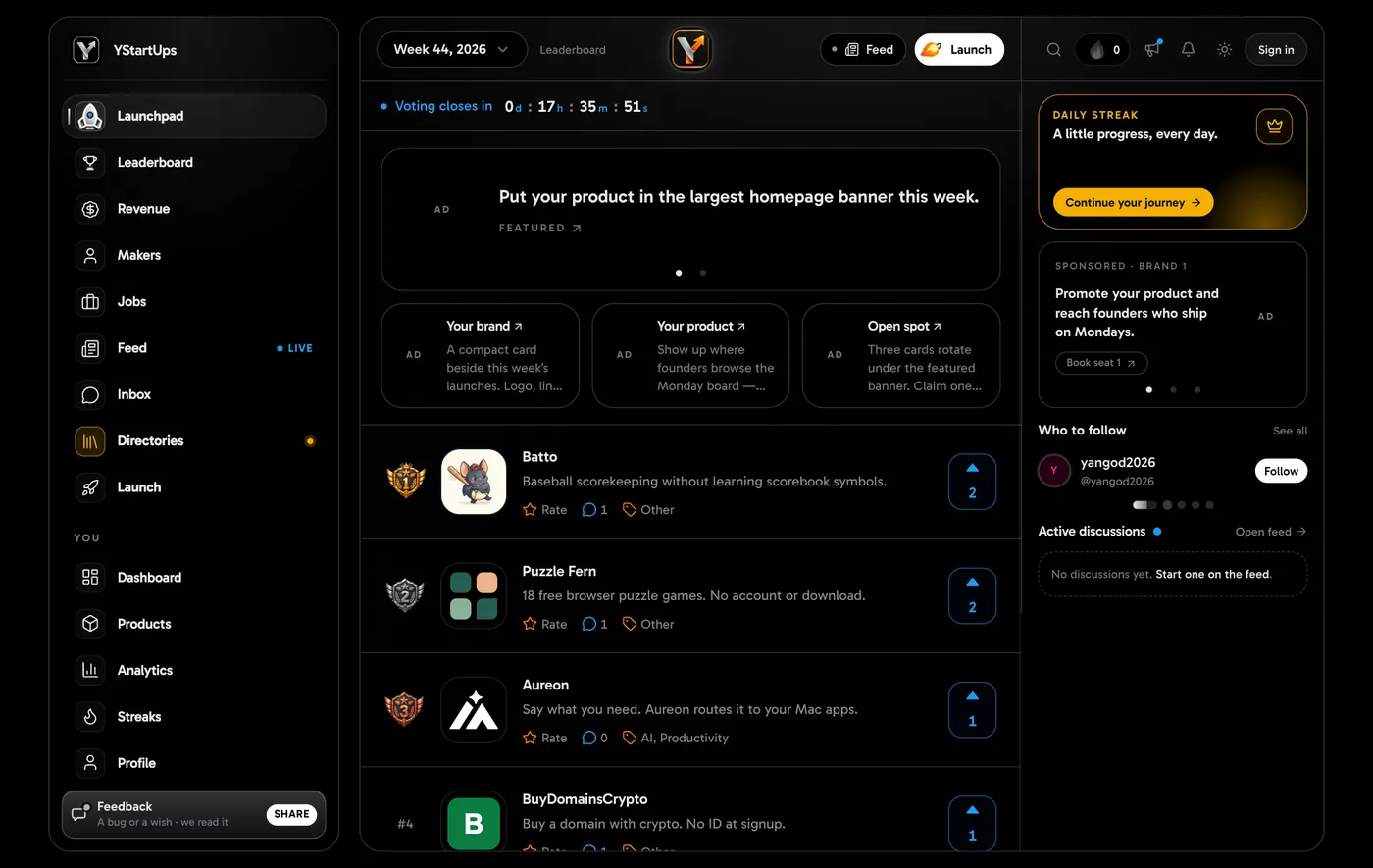
A weekly board keeps every launch on the page from Monday to Monday. That suits indie makers: you get seven days of visits and comments instead of a race that is over by the evening. On YStartUps a free launch goes live straight away with a permanent product page; see how the Monday window works.
Use the week to collect real feedback. Reply to every comment, fix the obvious things, and write down the questions people ask. They become your FAQ and your landing page copy.
Communities
Communities reward conversation, not announcements. On Show HN, lead with what you built and how it works. On Indie Hackers and subreddits, share what you learned and let the link be secondary. Read each community’s rules before you post; many remove plain promotion.
Daily launch sites
A daily site like Product Hunt can bring a large spike, but every launch competes for the same 24 hours. It works best once your product is polished from the first round of feedback and you have an audience ready to visit that morning. Our YStartUps vs Product Hunt page lays out the differences.
Directories and lists
Directories are slow but they last. Each listing is a page that can rank for your product name and send the occasional visitor for years. Prefer directories that real people browse, and keep your name, one-line description and logo the same everywhere so search engines and AI assistants recognise you as one product.
If you would rather not fill in the forms yourself, YStartUps offers done-for-you directory submission.
Before you launch anywhere
- One sentence that says what the product does and who it is for.
- A clear first screenshot; people decide from the first picture.
- A working sign-up or try-it link, tested on a phone.
- Three answers to the questions people will ask first (price, who it is for, how it is different).
More from the Journal
How a new startup gets its first backlinks
Launch listings, directories, partner pages, useful free tools and real conversations. What dofollow and nofollow mean, and which links are worth your time.
GEO and AEO for indie founders: getting your product into AI answers
What GEO and AEO mean, how AI answers pick the products they mention, and a short checklist an indie founder can do this week.
Product Hunt alternatives for indie makers
Weekly boards, maker communities and directories each give a small launch something a single day cannot. Pick by launch window, how links work and who is in the room.