How a new startup gets its first backlinks
A new domain has no links, so search engines have little reason to trust it. These are honest ways to earn the first ones without buying spam.

Why the first links matter
A backlink is a link from another site to yours. Search engines use links as one signal of which pages deserve attention. A brand-new domain has none, so even good pages can sit unseen. The first links will not make you rank on their own, but they get your pages discovered and give search engines a reason to look again.
Dofollow and nofollow, briefly
A normal link passes trust to the page it points to; people call it dofollow. A link marked nofollow (or ugc, or sponsored) asks search engines not to pass that trust. Nofollow links still bring visitors and help pages get found, so they are not worthless. Avoid paying for links sold as ranking boosts; search engines treat that as spam.
Where the first links come from
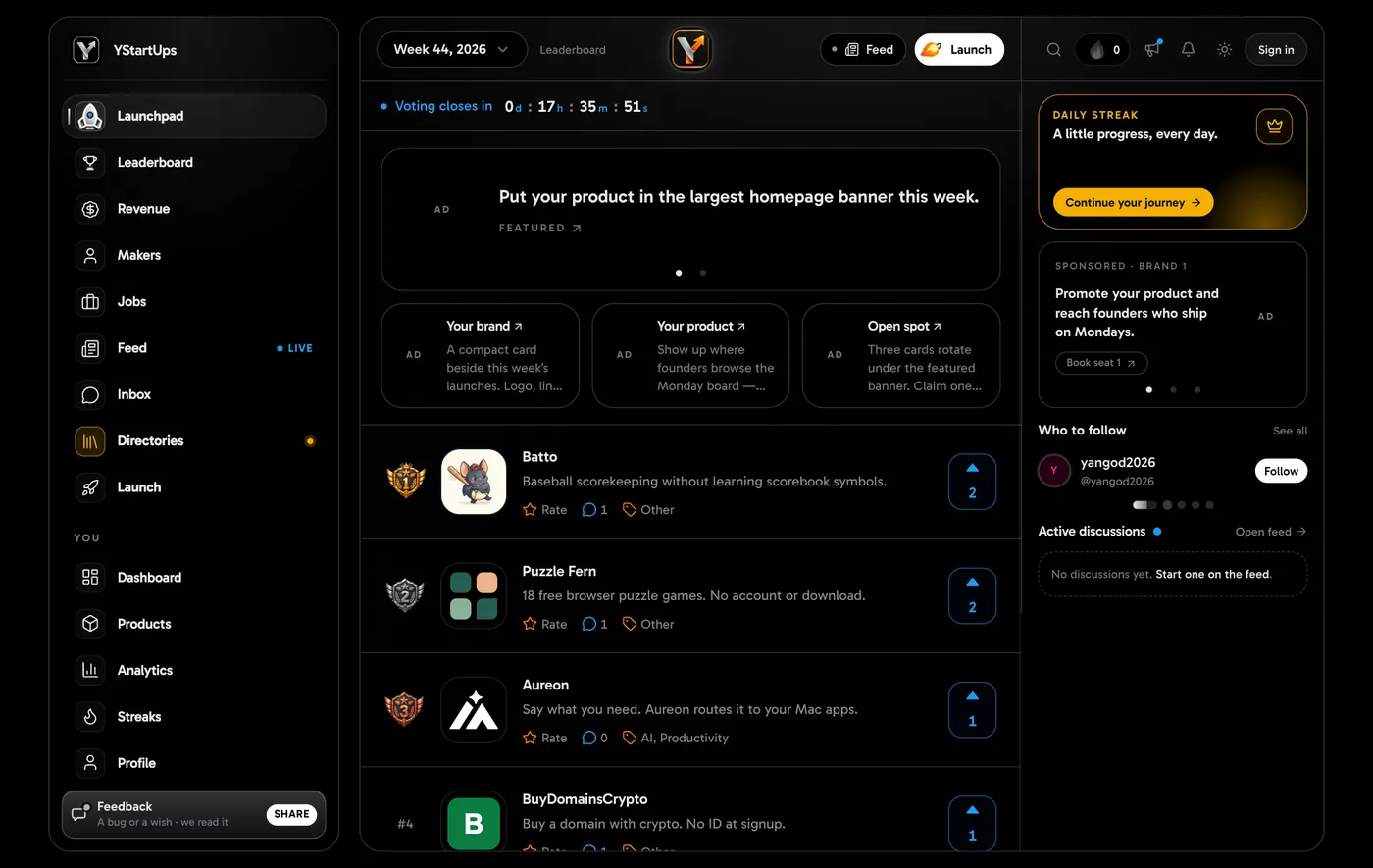
- Launch boards: a product page that links to your site. On YStartUps the link turns dofollow once you upvote and comment on a few launches, or with Premium.
- Directories that real people browse in your category.
- Integration and partner pages: if you build on a tool, many keep a page of products that use them.
- A small free tool or template people link to on their own.
- Founder profiles and the sites where you already show up: your GitHub, your X bio, your newsletter.
- Honest answers in communities, where a link is genuinely the answer to the question.
Keep it clean
- Use the same product name and one-line description everywhere.
- Point links at a real page, not a redirect chain.
- Check that your own site is crawlable: a sitemap, no accidental noindex, fast pages.
- Measure with your search console, not with third-party scores alone.
Our free tools can help with the checks: the dofollow and nofollow checker and the rest of the founder tools.
More from the Journal
GEO and AEO for indie founders: getting your product into AI answers
What GEO and AEO mean, how AI answers pick the products they mention, and a short checklist an indie founder can do this week.
Product Hunt alternatives for indie makers
Weekly boards, maker communities and directories each give a small launch something a single day cannot. Pick by launch window, how links work and who is in the room.
Where to launch your startup in 2026 (and in what order)
A launch is not one day on one site. Use a weekly board for feedback, communities for conversations, a daily board when you have an audience, and directories for links that last.